
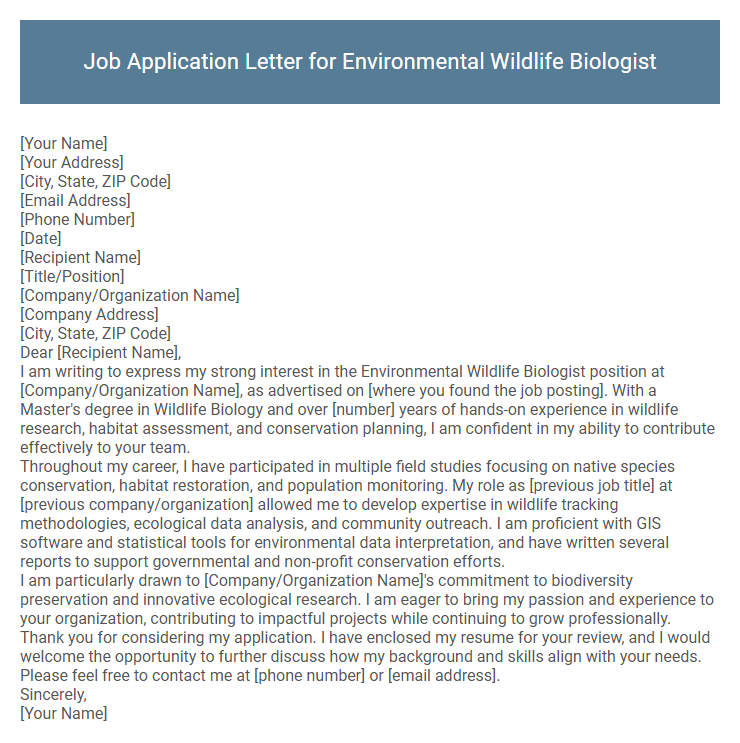
Job Application Letter for Environmental Wildlife Biologist Sample
[Your Address]
[City, State, ZIP Code]
[Email Address]
[Phone Number]
[Date]
[Recipient Name]
[Title/Position]
[Company/Organization Name]
[Company Address]
[City, State, ZIP Code]
Dear [Recipient Name],
I am writing to express my strong interest in the Environmental Wildlife Biologist position at [Company/Organization Name], as advertised on [where you found the job posting]. With a Master's degree in Wildlife Biology and over [number] years of hands-on experience in wildlife research, habitat assessment, and conservation planning, I am confident in my ability to contribute effectively to your team.
Throughout my career, I have participated in multiple field studies focusing on native species conservation, habitat restoration, and population monitoring. My role as [previous job title] at [previous company/organization] allowed me to develop expertise in wildlife tracking methodologies, ecological data analysis, and community outreach. I am proficient with GIS software and statistical tools for environmental data interpretation, and have written several reports to support governmental and non-profit conservation efforts.
I am particularly drawn to [Company/Organization Name]'s commitment to biodiversity preservation and innovative ecological research. I am eager to bring my passion and experience to your organization, contributing to impactful projects while continuing to grow professionally.
Thank you for considering my application. I have enclosed my resume for your review, and I would welcome the opportunity to further discuss how my background and skills align with your needs. Please feel free to contact me at [phone number] or [email address].
Sincerely,
[Your Name]
A job application letter for an Environmental Wildlife Biologist should emphasize expertise in ecological research, wildlife conservation, and habitat management. Highlighting experience with field studies, data analysis, and regulatory compliance ensures alignment with conservation goals. Demonstrating strong communication skills and a passion for environmental stewardship can strengthen candidacy for this specialized role.
What key qualifications should I highlight in my job application letter for an Environmental Wildlife Biologist position?
Highlight your expertise in wildlife ecology, habitat assessment, and conservation biology. Emphasize proficiency in field research techniques, data analysis, and use of GIS software. Showcase your experience with environmental regulations and collaborative project management.
How can I showcase relevant fieldwork experience in my application letter?
How can I effectively showcase relevant fieldwork experience in my job application letter for an Environmental Wildlife Biologist position? Emphasize specific projects where you conducted habitat assessments, species monitoring, or ecological surveys. Highlight measurable outcomes and the techniques used to demonstrate your practical skills and impact on conservation efforts.
What technical skills are employers seeking in wildlife biologist applicants?
Employers seek wildlife biologists with strong proficiency in GIS mapping, statistical analysis software like R or SAS, and proficiency in field data collection techniques. Experience in habitat assessment, species identification, and environmental impact assessments is essential. Skills in drone operation, remote sensing technology, and proficiency with database management systems enhance employability significantly.
Should I mention certifications or specialized training in my cover letter?
Mentioning certifications or specialized training in a job application letter for an Environmental Wildlife Biologist highlights relevant expertise and can boost credibility. Focus on certifications directly related to wildlife biology or environmental science to align with job requirements.
- Certifications demonstrate competence - They validate skills and knowledge essential for fieldwork and conservation efforts.
- Specialized training shows commitment - It reflects dedication to staying current with scientific methods and safety protocols.
- Tailored information increases relevance - Including specific credentials tailored to the job description attracts recruiter attention.
Strategically including certifications enhances the overall impact of your cover letter, improving your chances in competitive hiring processes.
How do I structure a job application letter for an environmental science role?
| Section | Content Guidelines |
|---|---|
| Header | Include your full name, contact details, date, and employer's name & address |
| Introduction | State the job role (Environmental Wildlife Biologist) and how you learned about the vacancy |
| Body | Highlight relevant qualifications, fieldwork experience, and skills related to ecology, wildlife conservation, data analysis, and environmental regulations |
| Achievements | Mention specific projects, publications, or successful research initiatives supporting conservation goals |
| Closing | Express enthusiasm for the role, availability for interview, and professional sign-off |
Which achievements are most valued by hiring committees in wildlife biology?
Hiring committees in wildlife biology highly value achievements that demonstrate hands-on field research experience and successful conservation project outcomes. Publications in peer-reviewed journals and contributions to policy development significantly enhance a candidate's profile.
Experience with GIS mapping, wildlife population monitoring, and habitat restoration projects are key accomplishments that show practical expertise. Leadership in collaborative research and securing funding through grants reflect strong project management skills. Demonstrated impact on species conservation and ecosystem health is critical for standing out in applications.
Is it important to demonstrate teamwork or leadership in my application letter?
Demonstrating teamwork and leadership in your job application letter for an Environmental Wildlife Biologist position is crucial because these skills highlight your ability to collaborate effectively and manage projects. Employers seek candidates who can work well with interdisciplinary teams and take initiative in conservation efforts.
- Teamwork - Emphasizes your capacity to collaborate with scientists, local communities, and policymakers to achieve conservation goals.
- Leadership - Shows your ability to lead field research, coordinate wildlife monitoring projects, and inspire team members toward shared objectives.
- Relevance - Highlighting these skills demonstrates your readiness to contribute positively to complex environmental challenges and organizational success.
How can I tailor my cover letter to a specific employer or conservation agency?
Tailor your cover letter by aligning your skills and experiences with the specific projects and goals of the employer or conservation agency. Highlight your knowledge of local wildlife and conservation challenges relevant to their work.
- Research the Employer - Understand their mission, recent projects, and conservation priorities to reflect these in your letter.
- Match Skillsets - Emphasize relevant fieldwork, data analysis, and species expertise that directly support their environmental objectives.
- Showcase Impact - Provide examples of how your contributions have positively influenced wildlife conservation and habitat restoration.
Should I include research publications or grant experience in my letter?
Including research publications in your job application letter for an Environmental Wildlife Biologist position demonstrates your expertise and contributions to the field. Mentioning grant experience highlights your ability to secure funding, which is valuable for research and conservation projects. Focus on relevant publications and grants that showcase your skills and align with the employer's priorities.