
Job Application Letter for Wildlife Biologist Sample
[Your Address]
[City, State, ZIP Code]
[Email Address]
[Phone Number]
[Date]
[Recipient's Name]
[Title/Position]
[Company/Organization Name]
[Address]
[City, State, ZIP Code]
Dear [Recipient's Name],
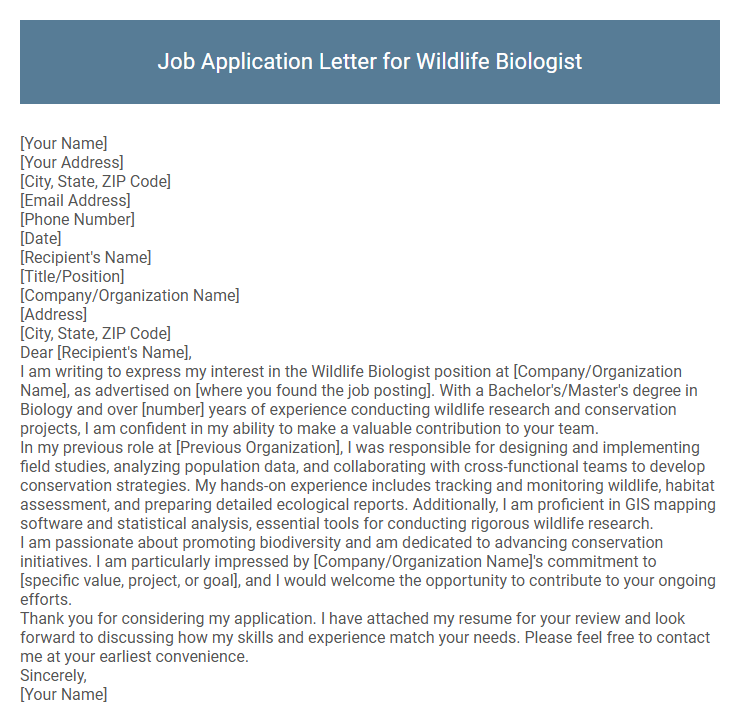
I am writing to express my interest in the Wildlife Biologist position at [Company/Organization Name], as advertised on [where you found the job posting]. With a Bachelor's/Master's degree in Biology and over [number] years of experience conducting wildlife research and conservation projects, I am confident in my ability to make a valuable contribution to your team.
In my previous role at [Previous Organization], I was responsible for designing and implementing field studies, analyzing population data, and collaborating with cross-functional teams to develop conservation strategies. My hands-on experience includes tracking and monitoring wildlife, habitat assessment, and preparing detailed ecological reports. Additionally, I am proficient in GIS mapping software and statistical analysis, essential tools for conducting rigorous wildlife research.
I am passionate about promoting biodiversity and am dedicated to advancing conservation initiatives. I am particularly impressed by [Company/Organization Name]'s commitment to [specific value, project, or goal], and I would welcome the opportunity to contribute to your ongoing efforts.
Thank you for considering my application. I have attached my resume for your review and look forward to discussing how my skills and experience match your needs. Please feel free to contact me at your earliest convenience.
Sincerely,
[Your Name]
A job application letter for a wildlife biologist should highlight relevant field experience, expertise in species conservation, and skills in data analysis and environmental research. Demonstrating passion for wildlife preservation and knowledge of ecological principles strengthens the candidate's appeal. Tailoring the letter to align with the organization's mission and current projects increases the chances of securing an interview.
What should I include in a wildlife biologist job application letter?
Include your relevant educational background, such as a degree in wildlife biology or environmental science, and highlight any fieldwork or research experience. Emphasize your skills in data collection, species identification, and habitat analysis, along with proficiency in relevant software or tools. Demonstrate your passion for conservation efforts and your ability to work collaboratively within multidisciplinary teams.
How do I highlight relevant fieldwork experience?
Highlight your specific fieldwork experiences related to wildlife biology by detailing the species studied, habitats explored, and research methods used. Emphasize any hands-on data collection, observation, and analysis that demonstrate your practical skills and scientific expertise.
Describe projects where you contributed to wildlife conservation, population monitoring, or habitat restoration, specifying your role and outcomes. Include technical skills such as GIS mapping, telemetry tracking, or sample collection. Quantify your achievements with metrics like the number of field hours, individuals tracked, or reports published to provide concrete evidence of your experience.
Should I mention specific wildlife research projects?
Including specific wildlife research projects in your job application letter as a Wildlife Biologist demonstrates relevant experience and expertise. Highlighting these projects can differentiate you from other candidates by showcasing your direct contributions to the field.
- Relevance - Mention projects that align closely with the job requirements to show your practical knowledge and skills.
- Impact - Describe outcomes or findings from your research to emphasize your ability to contribute meaningful results.
- Credibility - Specific projects provide evidence of your hands-on experience and dedication to wildlife conservation.
Choose your most significant projects that clearly support your suitability for the Wildlife Biologist position.
How can I showcase my technical skills in the letter?
Showcase your technical skills by highlighting specific wildlife research methodologies and data analysis tools you have mastered. Emphasize your experience with fieldwork technology and your ability to interpret ecological data to support conservation efforts.
- Detail your proficiency with GIS and remote sensing software - Explain how these tools have enabled precise habitat mapping and species tracking in your previous projects.
- Describe hands-on experience with wildlife monitoring equipment - Mention your use of camera traps, radio telemetry, or drone technology in studying animal behaviors.
- Highlight statistical and data analysis capabilities - Outline your competence in using programs like R or Python to analyze ecological datasets and draw meaningful conclusions.
Is it important to address the hiring manager by name?
Addressing the hiring manager by name in a job application letter for a Wildlife Biologist is important as it demonstrates attention to detail and professionalism. Personalizing the letter helps create a connection and shows genuine interest in the position. It can increase the chances of the application being noticed and taken seriously by the employer.
How do I demonstrate passion for wildlife conservation?
How can I effectively demonstrate passion for wildlife conservation in my job application letter for a Wildlife Biologist position? Highlight specific experiences such as field research, volunteer work with conservation organizations, or participation in wildlife rehabilitation projects. Emphasize your commitment by discussing ongoing education and advocacy efforts related to wildlife protection.
What educational background should I emphasize?
Emphasize a strong educational background in biology, ecology, or environmental science with a focus on wildlife conservation. Highlight relevant degrees such as a Bachelor's or Master's in Wildlife Biology or related fields.
Include coursework or research experience in animal behavior, habitat management, and ecological data analysis. Certifications in GIS or wildlife tracking techniques can also strengthen your application.
Should I discuss teamwork or independent research more?
Emphasize teamwork when applying for a Wildlife Biologist position, as collaboration with field teams, conservation organizations, and research institutions is crucial for successful project outcomes. Highlight your experience in coordinating efforts, sharing data, and contributing to multidisciplinary studies.
Include independent research skills to demonstrate your ability to design and execute experiments, analyze ecological data, and produce scientific reports. Balancing both aspects shows versatility, but prioritize teamwork to align with most employer expectations in conservation environments.
How do I format a wildlife biologist application letter?
Formatting a wildlife biologist application letter requires clear structure and professional tone. Emphasize relevant skills and experience aligned with the job description.
- Header - Include your contact information, date, and employer's details at the top of the letter.
- Introduction - Start with a strong opening that states the position you are applying for and a brief summary of your qualifications.
- Body - Highlight your fieldwork experience, technical skills, and knowledge of wildlife biology relevant to the role.
- Closing - Express enthusiasm for the position and request an interview opportunity, ending with a polite sign-off.
- Formatting - Use a standard font, professional layout, and keep the letter to one page in length.