
Job Application Letter for Research Officer Sample
[Your Address]
[City, State, ZIP Code]
[Email Address]
[Phone Number]
[Date]
[Recipient Name]
[Title/Position]
[Organization Name]
[Address]
[City, State, ZIP Code]
Dear [Recipient Name],
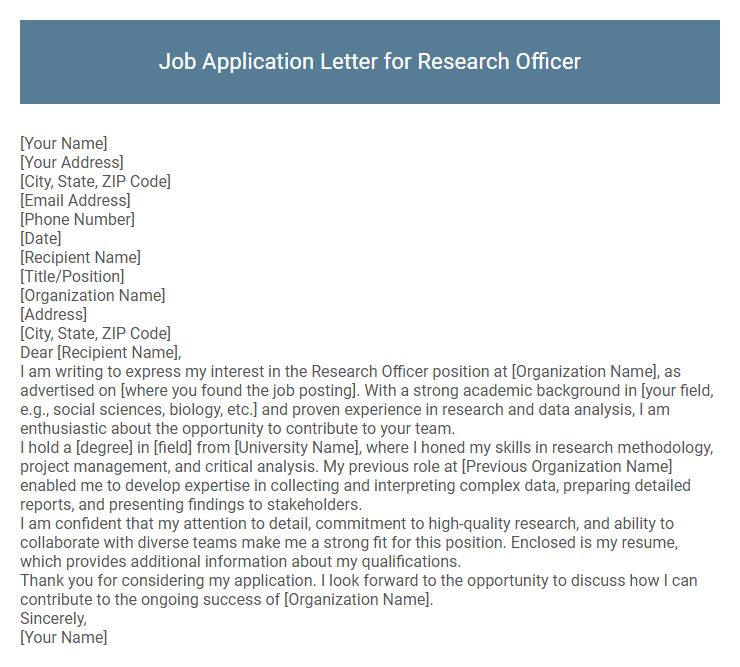
I am writing to express my interest in the Research Officer position at [Organization Name], as advertised on [where you found the job posting]. With a strong academic background in [your field, e.g., social sciences, biology, etc.] and proven experience in research and data analysis, I am enthusiastic about the opportunity to contribute to your team.
I hold a [degree] in [field] from [University Name], where I honed my skills in research methodology, project management, and critical analysis. My previous role at [Previous Organization Name] enabled me to develop expertise in collecting and interpreting complex data, preparing detailed reports, and presenting findings to stakeholders.
I am confident that my attention to detail, commitment to high-quality research, and ability to collaborate with diverse teams make me a strong fit for this position. Enclosed is my resume, which provides additional information about my qualifications.
Thank you for considering my application. I look forward to the opportunity to discuss how I can contribute to the ongoing success of [Organization Name].
Sincerely,
[Your Name]
Crafting a compelling job application letter for a Research Officer position highlights relevant skills in data analysis, experimental design, and academic research. Emphasizing experience in conducting rigorous studies and contributing to scientific publications demonstrates suitability for the role. Clear articulation of research objectives, methodologies, and outcomes strengthens the candidacy by showcasing analytical expertise and attention to detail.
What should I include in a job application letter for a Research Officer position?
Include a clear statement of your research expertise and relevant educational background in the job application letter for a Research Officer position. Highlight specific skills such as data analysis, project management, and experience with research methodologies. Demonstrate your ability to contribute to the organization's goals and mention any significant publications or projects related to the role.
How do I highlight my research skills in the application letter?
Highlight your research skills by detailing specific projects where you applied advanced methodologies, data analysis, or experimental techniques. Emphasize your ability to design, conduct, and interpret research that aligns with the organization's goals.
Include quantitative results or publications to demonstrate impact and reliability. Express proficiency with relevant tools, software, and collaboration within multidisciplinary teams to underscore your comprehensive research expertise.
Is it necessary to mention specific research projects in my letter?
Is it necessary to mention specific research projects in my job application letter for a Research Officer position? Highlighting relevant research projects demonstrates your practical experience and aligns your skills with the organization's focus. Including specific examples strengthens your application by showcasing your contributions and expertise.
What is the ideal length for a Research Officer job application letter?
The ideal length for a Research Officer job application letter is concise and focused, typically one page long.
- Conciseness - A clear and direct letter respects the recruiter's time and highlights key qualifications efficiently.
- Relevance - Including only pertinent research experience and skills ensures the letter remains impactful without unnecessary details.
- Readability - A length of about 300-400 words allows the applicant to present a strong narrative while maintaining the reader's attention.
A well-structured, succinct letter increases the chances of progressing to the interview stage for a Research Officer position.
Should I tailor my letter to each Research Officer job posting?
Tailoring your job application letter to each Research Officer position significantly increases your chances of standing out by addressing specific job requirements and organizational goals. Highlight relevant skills, experiences, and research expertise that align with the particular role and employer. Customizing your letter demonstrates genuine interest and a clear understanding of the position, making your application more compelling.
How do I address the letter if the hiring manager's name is unknown?
If the hiring manager's name is unknown, begin the letter with a generic but professional salutation such as "Dear Hiring Manager" or "Dear Recruitment Team." Avoid using vague greetings like "To Whom It May Concern" as they appear impersonal.
Researching the company's website or LinkedIn page may provide clues about the appropriate contact person. Addressing the letter thoughtfully demonstrates professionalism and keen interest in the Research Officer position.
Can I include technical jargon related to research methods?
Including technical jargon related to research methods in a Job Application Letter for a Research Officer is appropriate when it demonstrates your expertise and aligns with the job requirements. Use clear and concise language to highlight your familiarity with relevant methodologies without overwhelming the reader. Tailor the level of technical detail to the job description to ensure your qualifications are effectively communicated.
What tone should I use in a Research Officer application letter?
Use a professional and confident tone in a Research Officer application letter. Show enthusiasm for research and highlight relevant skills clearly.
Maintain formality and avoid overly casual language to demonstrate seriousness about the role. Emphasize your analytical abilities and attention to detail. Convey a strong commitment to contributing to the organization's research goals.
Do I need to mention my academic qualifications in the letter?
Yes, mentioning academic qualifications in a Job Application Letter for a Research Officer is essential. It highlights your relevant expertise and strengthens your candidacy.
- Academic qualifications establish credibility - They demonstrate your formal education and preparedness for research responsibilities.
- Relevant degrees align with job requirements - Listing specific degrees related to research fields attracts employer attention.
- Showcases specialized training or certifications - Including these details can distinguish you from other applicants.