
Job Application Letter for Tailor Sample
[Your Address]
[City, State, ZIP Code]
[Email Address]
[Phone Number]
[Date]
[Recipient Name]
[Company Name]
[Company Address]
[City, State, ZIP Code]
Dear [Recipient Name],
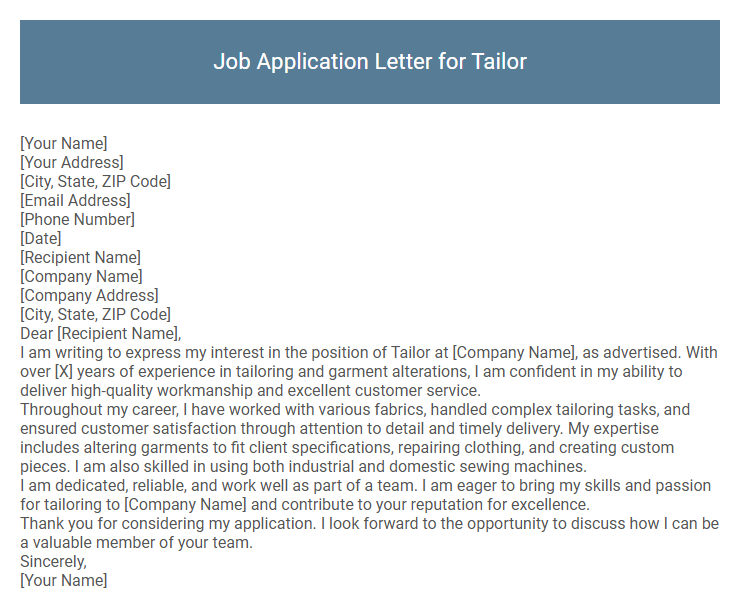
I am writing to express my interest in the position of Tailor at [Company Name], as advertised. With over [X] years of experience in tailoring and garment alterations, I am confident in my ability to deliver high-quality workmanship and excellent customer service.
Throughout my career, I have worked with various fabrics, handled complex tailoring tasks, and ensured customer satisfaction through attention to detail and timely delivery. My expertise includes altering garments to fit client specifications, repairing clothing, and creating custom pieces. I am also skilled in using both industrial and domestic sewing machines.
I am dedicated, reliable, and work well as part of a team. I am eager to bring my skills and passion for tailoring to [Company Name] and contribute to your reputation for excellence.
Thank you for considering my application. I look forward to the opportunity to discuss how I can be a valuable member of your team.
Sincerely,
[Your Name]
A job application letter for a tailor highlights your expertise in garment construction, fabric selection, and alterations tailored to client needs. Emphasizing attention to detail, creativity, and proficiency with sewing machines can set you apart in a competitive market. Demonstrating experience in custom fitting and customer service showcases your commitment to quality and client satisfaction.
What should I include in a job application letter for a tailor position?
Include a clear introduction stating the tailor position you are applying for and where you found the job listing. Highlight your tailoring skills, relevant experience, and any specialized techniques or fabric knowledge. Conclude with a willingness to discuss your qualifications further and provide your contact information for an interview.
How do I highlight my tailoring skills in the application letter?
Emphasize your expertise in fabric selection, cutting, and stitching by mentioning specific tailoring techniques you have mastered. Highlight your experience in creating custom garments tailored to clients' measurements and preferences. Showcase your attention to detail and ability to deliver high-quality, professionally finished products.
What is the ideal length for a tailor job application letter?
The ideal length for a tailor job application letter is one page, typically around 200 to 300 words. This length ensures concise communication of skills and experience without overwhelming the reader.
Keeping the letter between 3 to 4 paragraphs allows for a clear introduction, a brief summary of tailoring expertise, and a strong closing statement. Employers prefer a well-structured letter that quickly highlights relevant qualifications.
Should I mention specific tailoring techniques or specialties?
Mentioning specific tailoring techniques or specialties in a job application letter helps demonstrate your expertise and suitability for the role. Highlighting these skills can differentiate you from other candidates and showcase your unique qualifications.
Focus on techniques directly relevant to the job description or employer's needs to maximize impact and show alignment with their expectations.
- Highlight relevant skills - Specify tailoring techniques that match the job requirements to emphasize your suitability.
- Showcase specialties - Mention any unique tailoring methods or garment types you excel in to stand out.
- Keep it concise - Include only skills that add value to your application without overwhelming the reader.
How do I address previous tailoring work experience?
How do I address previous tailoring work experience in a job application letter? Highlight specific skills and projects from your past tailoring roles that demonstrate your expertise and reliability. Emphasize achievements such as custom fittings, alterations, or garment construction that align with the job requirements.
Is it necessary to include certifications or training in tailoring?
Including certifications or training in tailoring can significantly enhance a job application letter by demonstrating verified skills and expertise. Employers often prioritize candidates with formal qualifications as it assures quality and professionalism.
However, if extensive practical experience is present, it may sometimes substitute for formal certifications. Highlighting relevant training or courses can still strengthen the application and improve chances of securing the position.
How do I demonstrate attention to detail in my application letter?
In a job application letter for a tailor position, demonstrating attention to detail involves highlighting specific tailoring skills such as precise measurements, fabric selection, and stitching accuracy. Mentioning past experiences where meticulousness contributed to client satisfaction reinforces your capability.
Use clear, concise language to describe how you check every seam and pattern alignment thoroughly before completing garments. Emphasize your patience and commitment to perfection in tailoring projects. Including examples of customized orders or repairs that required exceptional detail showcases your dedication effectively.
What salutation should I use for a tailor job letter?
When addressing a job application letter for a tailor position, use a professional salutation such as "Dear Hiring Manager" if the recipient's name is unknown. If the name is available, use "Dear Mr. [Last Name]" or "Dear Ms. [Last Name]" for a personalized touch. Avoid informal greetings to maintain a respectful and professional tone.
Should I attach a portfolio of my tailoring work?
Attaching a portfolio of your tailoring work with your job application letter can significantly enhance your chances of securing the position. A portfolio showcases your skills, creativity, and attention to detail, providing tangible evidence of your craftsmanship. Employers often prefer candidates who present a comprehensive view of their work, making the inclusion of a well-curated portfolio highly beneficial.