
Job Application Letter for Instrumentation Technician Sample
[Your Address]
[City, State, ZIP Code]
[Email Address]
[Phone Number]
[Date]
[Recipient Name]
[Company Name]
[Company Address]
[City, State, ZIP Code]
Dear [Recipient Name],
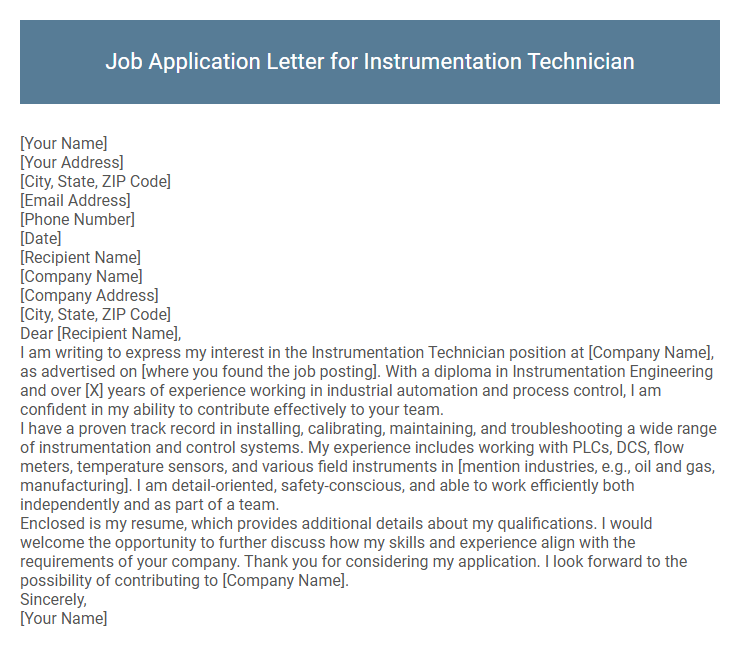
I am writing to express my interest in the Instrumentation Technician position at [Company Name], as advertised on [where you found the job posting]. With a diploma in Instrumentation Engineering and over [X] years of experience working in industrial automation and process control, I am confident in my ability to contribute effectively to your team.
I have a proven track record in installing, calibrating, maintaining, and troubleshooting a wide range of instrumentation and control systems. My experience includes working with PLCs, DCS, flow meters, temperature sensors, and various field instruments in [mention industries, e.g., oil and gas, manufacturing]. I am detail-oriented, safety-conscious, and able to work efficiently both independently and as part of a team.
Enclosed is my resume, which provides additional details about my qualifications. I would welcome the opportunity to further discuss how my skills and experience align with the requirements of your company. Thank you for considering my application. I look forward to the possibility of contributing to [Company Name].
Sincerely,
[Your Name]
Crafting a compelling job application letter for an instrumentation technician emphasizes technical expertise, experience with calibration and maintenance of instrumentation systems, and a commitment to safety protocols. Highlighting proficiency with diagnostic tools and ability to troubleshoot complex instrumentation issues showcases technical strengths. Emphasizing teamwork and communication skills demonstrates readiness to contribute effectively within multidisciplinary engineering environments.
What should be included in a job application letter for an Instrumentation Technician?
A job application letter for an Instrumentation Technician should include a clear introduction stating the position applied for and how the candidate learned about the vacancy. It must highlight relevant technical skills such as calibration, troubleshooting, and maintenance of instrumentation systems, along with certifications and work experience. The letter should end with a confident closing expressing enthusiasm for the role and a request for an interview opportunity.
How do I format a professional job application letter?
| Section | Details |
|---|---|
| Header | Include your name, address, phone number, email, and date. Add employer's name, company, and address below this. |
| Salutation | Use a formal greeting such as "Dear Hiring Manager" or the specific contact name. |
| Introduction | State the position you are applying for and where you found the job listing. Briefly mention your professional background. |
| Body | Highlight relevant skills and experience in instrumentation technology. Mention certifications, technical expertise, and key achievements. |
| Closing | Express interest in an interview, thank the reader for their time, and use a formal closing like "Sincerely" followed by your name. |
What are essential skills to mention in the letter?
Essential skills to mention in a Job Application Letter for an Instrumentation Technician include proficiency in calibration, installation, and maintenance of instrumentation systems. Emphasize strong troubleshooting abilities and knowledge of control systems to ensure operational efficiency.
Highlight experience with various sensors, transmitters, and PLCs, alongside safety compliance and documentation skills. Communication skills and the ability to work collaboratively in team environments are crucial for successful project execution.
How do I highlight relevant experience for an Instrumentation Technician role?
Emphasize hands-on experience with calibration, installation, and maintenance of instrumentation equipment. Highlight specific projects or systems you have worked on that demonstrate your technical skills and problem-solving abilities. Include certifications and familiarity with industry standards to showcase your professional qualifications.
What certifications should I list in the application letter?
What certifications should I list in a job application letter for an Instrumentation Technician? Highlight certifications such as Certified Instrumentation Technician (CIT) from the International Society of Automation (ISA) and OSHA safety training certificates. Include any relevant electrical or control systems certifications to demonstrate expertise and safety compliance.
How long should the application letter be?
The job application letter for an Instrumentation Technician should be concise, typically one page. Keeping the letter brief ensures the recruiter quickly understands your qualifications and interest.
- Optimal Length - One page, approximately 250-300 words, balances detail with readability.
- Content Focus - Prioritize key skills and relevant experience without unnecessary elaboration.
- Format Efficiency - Clear paragraphs and bullet points improve scanning by hiring managers.
How do I address the hiring manager in my letter?
Address the hiring manager respectfully and professionally in your job application letter for an Instrumentation Technician. Use a clear and direct salutation to create a positive first impression.
- Use the hiring manager's name - Personalize the letter by researching and including the specific name of the hiring manager when possible.
- Default to formal titles - If the name is not available, use formal titles such as "Dear Hiring Manager" or "Dear Recruitment Team" to maintain professionalism.
- Avoid generic greetings - Refrain from vague or outdated phrases like "To Whom It May Concern" to enhance relevance and respect.
Should I mention specific instrumentation systems I've worked with?
Mentioning specific instrumentation systems you have worked with in your job application letter for an Instrumentation Technician position strengthens your candidacy. It demonstrates your practical experience and familiarity with relevant technologies.
Detailing systems such as PLCs, DCS, or SCADA shows your technical expertise and helps employers assess your fit for their needs. Highlighting certifications or projects involving these systems adds credibility. Tailor the information to match the job description for maximum impact.
What achievements should I include in my letter?
Highlight specific projects where you improved instrument calibration accuracy or reduced downtime. Include quantified results such as percentage improvements or cost savings related to maintenance and troubleshooting. Emphasize certifications, training, or successful implementation of advanced instrumentation technologies.