
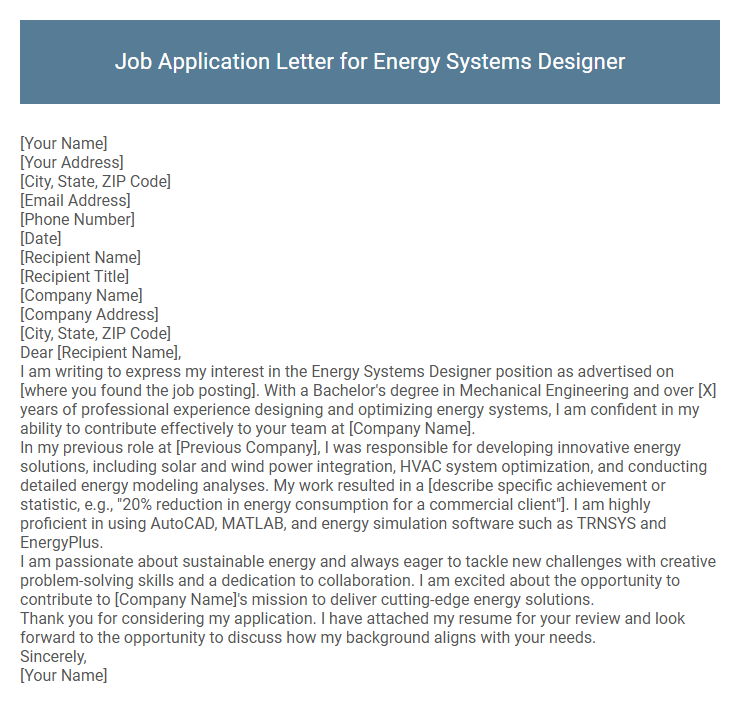
Job Application Letter for Energy Systems Designer Sample
[Your Address]
[City, State, ZIP Code]
[Email Address]
[Phone Number]
[Date]
[Recipient Name]
[Recipient Title]
[Company Name]
[Company Address]
[City, State, ZIP Code]
Dear [Recipient Name],
I am writing to express my interest in the Energy Systems Designer position as advertised on [where you found the job posting]. With a Bachelor's degree in Mechanical Engineering and over [X] years of professional experience designing and optimizing energy systems, I am confident in my ability to contribute effectively to your team at [Company Name].
In my previous role at [Previous Company], I was responsible for developing innovative energy solutions, including solar and wind power integration, HVAC system optimization, and conducting detailed energy modeling analyses. My work resulted in a [describe specific achievement or statistic, e.g., "20% reduction in energy consumption for a commercial client"]. I am highly proficient in using AutoCAD, MATLAB, and energy simulation software such as TRNSYS and EnergyPlus.
I am passionate about sustainable energy and always eager to tackle new challenges with creative problem-solving skills and a dedication to collaboration. I am excited about the opportunity to contribute to [Company Name]'s mission to deliver cutting-edge energy solutions.
Thank you for considering my application. I have attached my resume for your review and look forward to the opportunity to discuss how my background aligns with your needs.
Sincerely,
[Your Name]
Crafting a compelling job application letter for an Energy Systems Designer highlights expertise in designing innovative, sustainable energy solutions that meet modern industry demands. Emphasizing technical proficiency in renewable energy technologies, system optimization, and project management strengthens candidacy. Demonstrating a commitment to eco-friendly design and continuous professional development aligns with the evolving energy sector's needs.
What should I include in a job application letter for an Energy Systems Designer role?
Include a strong introduction highlighting your expertise in energy systems design and relevant technical skills, such as proficiency in CAD software and renewable energy technologies. Emphasize your experience with energy efficiency projects, sustainable design principles, and successful collaboration with multidisciplinary teams. Conclude with your enthusiasm for contributing to innovative energy solutions and how your background aligns with the company's goals.
How do I highlight my technical skills in an Energy Systems Designer cover letter?
| Tip | Description |
|---|---|
| Specify Software Proficiency | Mention expertise in CAD tools, simulation software like MATLAB, AutoCAD, or EnergyPlus used in energy system design. |
| Detail Engineering Skills | Highlight skills in thermodynamics, HVAC system design, renewable energy integration, and system optimization. |
| Quantify Achievements | Include measurable outcomes such as energy savings percentages, cost reductions, or efficiency improvements from past projects. |
| Project Examples | Describe specific projects demonstrating your ability to design, analyze, and implement energy systems. |
| Certifications & Training | List relevant certifications like LEED, Certified Energy Manager (CEM), or specialized training in sustainable energy technologies. |
What is the ideal length for a job application letter for this position?
The ideal length for a job application letter for an Energy Systems Designer position is one page, typically between 300 to 400 words. This length allows the applicant to clearly highlight relevant skills, experience, and motivation without overwhelming the reader.
The letter should concisely showcase expertise in energy system design, familiarity with industry standards, and problem-solving abilities. Emphasizing key projects and technical proficiency within this space strengthens the application. Keeping the content focused and structured enhances readability for hiring managers.
Should I mention specific energy systems software in my letter?
Mentioning specific energy systems software in your job application letter demonstrates your technical expertise and alignment with the employer's requirements. It highlights your hands-on experience with tools crucial for designing and analyzing energy systems.
Ensure the software you reference is relevant to the job description and reflects current industry standards, such as HOMER, RETScreen, or MATLAB Simulink. This detail can set you apart from other candidates by showcasing your practical skills and readiness to contribute effectively.
How do I show my knowledge of renewable energy trends in my application?
Demonstrate your knowledge of renewable energy trends by referencing recent advancements in solar, wind, and energy storage technologies. Highlight your experience with integrating smart grid solutions and sustainability practices in previous projects. Mention any certifications or continuous education courses related to cutting-edge renewable energy systems to reinforce your expertise.
Is it necessary to include certifications in my job application letter?
Including certifications in your job application letter for an Energy Systems Designer position is highly recommended as it demonstrates your verified expertise and commitment to the field. Relevant certifications such as PE (Professional Engineer) or LEED accreditation can set you apart from other candidates by validating your skills and knowledge. Highlighting these credentials directly in your letter can increase your chances of progressing to the interview stage.
How can I demonstrate my teamwork skills in the cover letter?
Highlight collaborative projects and specific instances where you contributed to team success in energy systems design. Emphasize communication, problem-solving, and coordination skills that enhanced team outcomes.
- Project Collaboration - Describe your role in cross-functional teams working on renewable energy system implementations.
- Effective Communication - Showcase how you facilitated clear information exchange to align team objectives and deadlines.
- Conflict Resolution - Provide an example of resolving technical disagreements to maintain team productivity.
Demonstrating these teamwork skills illustrates your ability to contribute effectively within multidisciplinary energy design teams.
What achievements should I showcase as an Energy Systems Designer applicant?
Highlight successful design and implementation of energy-efficient systems that reduced energy consumption by a significant percentage. Showcase projects where innovative solutions led to cost savings and improved system performance.
Emphasize proficiency with relevant software tools and compliance with industry standards. Include instances of collaboration with multidisciplinary teams to deliver sustainable energy solutions on time and within budget.
How formal should the tone be in my application letter?
The tone of a job application letter for an Energy Systems Designer should be professional and respectful, reflecting the technical and specialized nature of the role. Maintaining formality demonstrates seriousness and suitability for the position.
- Professionalism - Use clear, concise language that highlights your technical expertise without being overly casual.
- Respectfulness - Address the hiring manager formally and avoid slang to show respect for the company and role.
- Clarity - Present your qualifications confidently, ensuring the tone reflects your capability and dedication to the field.