
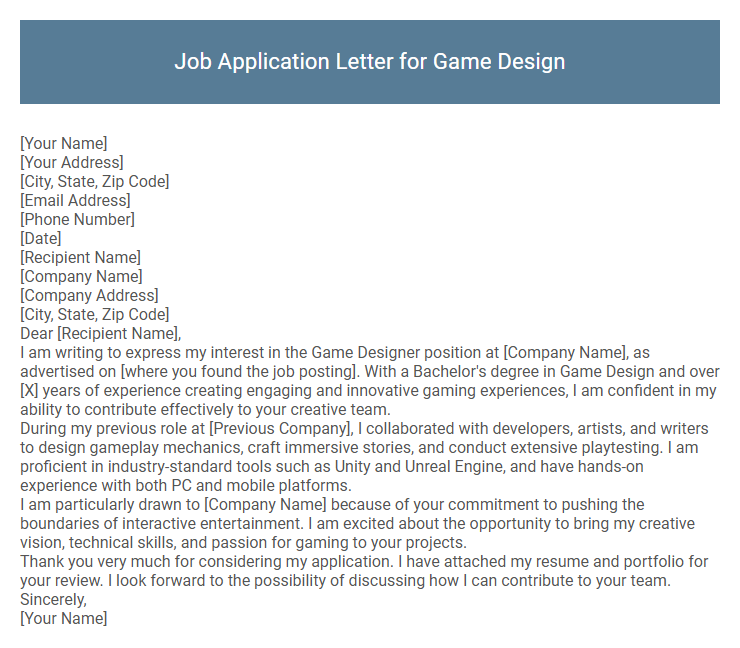
Job Application Letter for Game Design Sample
[Your Address]
[City, State, Zip Code]
[Email Address]
[Phone Number]
[Date]
[Recipient Name]
[Company Name]
[Company Address]
[City, State, Zip Code]
Dear [Recipient Name],
I am writing to express my interest in the Game Designer position at [Company Name], as advertised on [where you found the job posting]. With a Bachelor's degree in Game Design and over [X] years of experience creating engaging and innovative gaming experiences, I am confident in my ability to contribute effectively to your creative team.
During my previous role at [Previous Company], I collaborated with developers, artists, and writers to design gameplay mechanics, craft immersive stories, and conduct extensive playtesting. I am proficient in industry-standard tools such as Unity and Unreal Engine, and have hands-on experience with both PC and mobile platforms.
I am particularly drawn to [Company Name] because of your commitment to pushing the boundaries of interactive entertainment. I am excited about the opportunity to bring my creative vision, technical skills, and passion for gaming to your projects.
Thank you very much for considering my application. I have attached my resume and portfolio for your review. I look forward to the possibility of discussing how I can contribute to your team.
Sincerely,
[Your Name]
Crafting a compelling job application letter for game design showcases your creativity, technical skills, and passion for interactive storytelling. Highlighting relevant experience with game development tools, design principles, and collaborative projects emphasizes your ability to contribute effectively to a development team. Emphasizing a strong understanding of player engagement and innovative gameplay mechanics can set your application apart in a competitive industry.
What should I include in a job application letter for game design?
Include a clear introduction stating the game design position you are applying for and how you found the job opening. Highlight your relevant skills such as proficiency in game development software, creativity, and experience with game mechanics or storytelling. Conclude with a brief mention of your portfolio or past projects and express enthusiasm for contributing to the company's game design team.
How do I highlight my game design experience?
Emphasize specific projects or games you've designed, detailing your role and key contributions. Showcase your skills with design tools, programming languages, and creativity in gameplay mechanics. Include measurable outcomes like user engagement, positive feedback, or successful game launches to demonstrate real-world impact.
Should I attach a game design portfolio with my application letter?
Attaching a game design portfolio with your application letter significantly strengthens your candidacy by showcasing your practical skills and creativity. Employers in the gaming industry prioritize portfolios as tangible evidence of your design abilities and problem-solving approach. Including a well-organized portfolio tailored to the job role increases your chances of standing out in a competitive selection process.
How do I mention relevant technical skills in my letter?
Highlight specific technical skills such as proficiency in game engines like Unity or Unreal Engine, programming languages like C++ or C#, and experience with 3D modeling software like Blender. Emphasize how these skills have contributed to past projects or game development achievements.
Describe practical applications of your technical expertise, such as creating gameplay mechanics or optimizing game performance. Mention relevant certifications or courses completed in game design and development. Tailor the skills to match the job description to demonstrate your fit for the position.
Can I apply for game design jobs without formal education?
Can I apply for game design jobs without formal education?
Yes, many game design employers prioritize skills and portfolio over formal degrees. Building a strong portfolio and gaining practical experience through projects or internships can significantly enhance your job prospects.
How long should my job application letter be?
| Aspect | Recommended Length |
|---|---|
| Ideal Word Count | 250-400 words |
| Page Length | One page, single-spaced |
| Paragraph Count | 3-4 concise paragraphs |
| Content Focus | Introduction, relevant experience, skills, closing statement |
| Reader Attention | Keep it brief to maintain recruiter interest |
What is the best way to address the hiring manager?
Addressing the hiring manager correctly in a game design job application letter shows professionalism and attention to detail. Using the right salutation creates a positive first impression, setting the tone for the application.
- Use the hiring manager's name - Find the name through the company's website or LinkedIn to personalize the greeting and demonstrate research effort.
- Use a specific job title - When the name is unavailable, use the exact title such as "Hiring Manager for Game Design" to keep the address relevant and respectful.
- Avoid generic greetings - Phrases like "To Whom It May Concern" can seem impersonal and reduce engagement with the application.
How do I showcase teamwork skills in my letter?
Highlight specific projects where you collaborated with artists, programmers, and writers to create cohesive game experiences. Mention roles you played in team meetings, problem-solving sessions, or collaborative brainstorming to emphasize your active participation.
Describe challenges faced as a team and how your communication and cooperation contributed to overcoming them. Use quantifiable results, such as improved project timelines or enhanced game features, to demonstrate the impact of your teamwork skills.
Should I mention familiarity with specific game engines?
Mentioning familiarity with specific game engines in a job application letter for game design is highly beneficial. It highlights technical skills and aligns your expertise with the employer's requirements.
- Relevance - Demonstrates direct experience with tools used in the industry like Unity or Unreal Engine.
- Competitive Edge - Sets you apart from candidates lacking hands-on knowledge of popular game engines.
- Confidence - Shows readiness to contribute effectively from day one in the development process.