
Job Application Letter for Trainer Sample
[Your Address]
[City, State, ZIP Code]
[Email Address]
[Phone Number]
[Date]
[Recipient's Name]
[Title/Position]
[Company/Organization Name]
[Address]
[City, State, ZIP Code]
Dear [Recipient's Name],
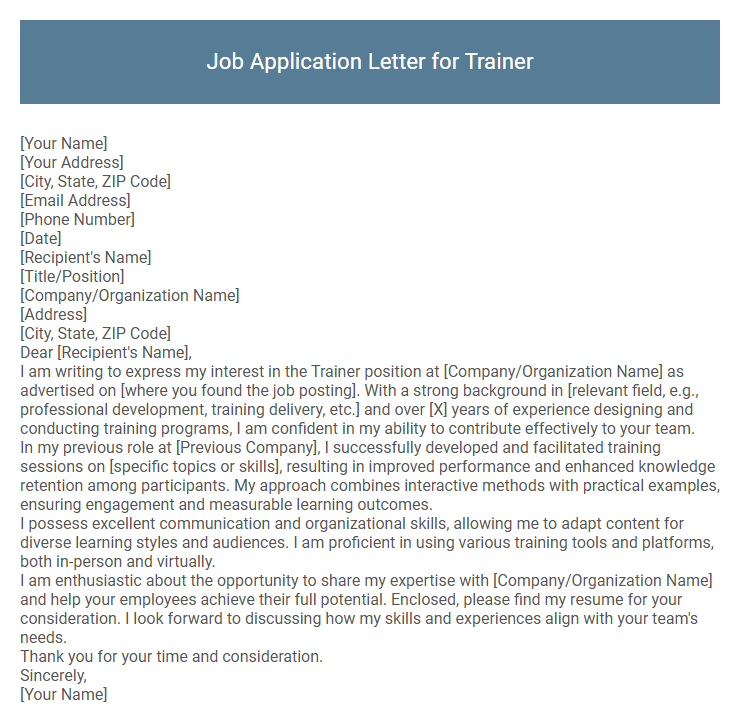
I am writing to express my interest in the Trainer position at [Company/Organization Name] as advertised on [where you found the job posting]. With a strong background in [relevant field, e.g., professional development, training delivery, etc.] and over [X] years of experience designing and conducting training programs, I am confident in my ability to contribute effectively to your team.
In my previous role at [Previous Company], I successfully developed and facilitated training sessions on [specific topics or skills], resulting in improved performance and enhanced knowledge retention among participants. My approach combines interactive methods with practical examples, ensuring engagement and measurable learning outcomes.
I possess excellent communication and organizational skills, allowing me to adapt content for diverse learning styles and audiences. I am proficient in using various training tools and platforms, both in-person and virtually.
I am enthusiastic about the opportunity to share my expertise with [Company/Organization Name] and help your employees achieve their full potential. Enclosed, please find my resume for your consideration. I look forward to discussing how my skills and experiences align with your team's needs.
Thank you for your time and consideration.
Sincerely,
[Your Name]
Crafting a compelling job application letter for a trainer position requires highlighting relevant experience, key skills, and a passion for employee development. Emphasizing expertise in designing engaging training programs and fostering professional growth can capture the employer's attention. A concise, targeted letter demonstrates both commitment and suitability for the role.
What should I include in a job application letter for a Trainer position?
Include a clear introduction stating the Trainer position you are applying for and where you found the job listing. Highlight your relevant experience, certifications, and key skills such as communication, training design, and presentation abilities. Conclude with your enthusiasm for the role and a call to action for an interview opportunity.
How do I highlight my training experience in the letter?
Emphasize specific training roles you have held, mentioning the types of training programs you designed and delivered. Highlight measurable outcomes, such as improved employee performance or successful certification rates.
Use action verbs like "developed," "facilitated," and "mentored" to showcase your active role in training. Include any relevant certifications or tools you used to enhance the learning experience.
Should I mention certifications in my application letter?
| Aspect | Details |
|---|---|
| Purpose of Mentioning Certifications | Certifications demonstrate expertise, validate skills, and boost credibility as a Trainer. |
| When to Include Certifications | Include relevant certifications that directly relate to the training role or industry. |
| Placement in Letter | Highlight certifications in the introduction or skills section to capture attention early. |
| Examples of Certifications | Certified Professional Trainer (CPT), Instructional Design Certification, or industry-specific qualifications. |
| Impact on Application | Mentioning certifications increases chances of standing out and meeting employer requirements. |
What is the ideal length for a Trainer application letter?
The ideal length for a Trainer job application letter is one page, typically around 300 to 400 words. This length allows for a concise presentation of relevant skills, experience, and motivation without overwhelming the reader. Keeping the letter clear and focused increases the chances of making a strong impression on hiring managers.
How do I address gaps in my training experience?
Address gaps in your training experience by emphasizing transferable skills and relevant accomplishments during those periods. Highlight any informal training, self-study, or volunteer work that kept your skills sharp and aligned with the trainer role.
Explain briefly any gaps with honesty but focus on your eagerness to grow and adapt within the training industry. Demonstrating a proactive attitude towards learning bridges those experience gaps effectively.
What tone should I use in a Trainer job application letter?
Use a professional and confident tone to demonstrate your expertise and reliability as a Trainer. Maintain a positive and enthusiastic tone to convey your passion for teaching and helping others grow.
- Professional - Reflects your competence and seriousness about the training role.
- Confident - Shows assurance in your skills and ability to lead training sessions effectively.
- Enthusiastic - Communicates your motivation and eagerness to contribute to learner development.
How do I tailor my letter for a specific training role?
Highlight relevant training certifications and hands-on experience that match the job description. Use specific examples demonstrating your success in delivering engaging, impactful training sessions. Emphasize skills and achievements directly aligned with the company's industry and training objectives.
Should I include references in my application letter?
Including references in a job application letter for a Trainer position is generally not necessary unless explicitly requested by the employer. Focus on demonstrating your relevant skills, experience, and training certifications instead.
Employers usually prefer references to be provided separately during later stages of the hiring process. Mentioning that references are available upon request is sufficient. This approach keeps your application concise and professional while signaling your readiness to provide credible endorsements.
How can I demonstrate communication skills in my letter?
How can I effectively demonstrate my communication skills in a job application letter for a Trainer position? Highlight clear, concise language and provide examples of past training experiences where your communication led to successful learning outcomes. Emphasize your ability to adapt messages for diverse audiences and engage participants actively.